Best Smart Home Devices 2025 Top Picks, Technology Trends & Real-World Applications
As we move deeper into 2025, smart home technology continues to evolve rapidly. Homeowners and tech enthusiasts are now seeking intelligent devices that not only automate tasks but also provide energy efficiency, seamless interoperability, and user-centric features. To craft an effective smart home today, choosing the right devices is crucial. In this article, we will identify the best smart home devices of 2025, explain why they stand out, explore the tech driving them, and show how they solve real-life challenges.
What Makes a Device Among the Best in 2025
When evaluating smart devices in 2025, a few criteria distinguish the top performers:
-
Interoperability & Matter support -Devices that can work across ecosystems using open standards (such as Matter) are increasingly valuable.
-
Reliability & performance -Fast response, low latency, stable connectivity, minimal downtime.
-
Energy efficiency/power management -Devices that minimize energy consumption when idle or use power-saving modes.
-
Ease of setup & user experience-Straightforward installation, clear app interfaces, and good automation features.
-
Innovative features -For example, spatial reasoning, AI enhancements, or multi-functionality.
By applying these principles, we can assess and present a selection of standout devices in 2025.
Leading Smart Home Devices in 2025 (Examples)
Here are several real-world devices representing the cutting edge of smart home tech in 2025. Each device plays a different role in a smart ecosystem, and together they show how a modern smart home can function seamlessly.
1. SONOFF Smart Wall Switch EU M5 (Matter)
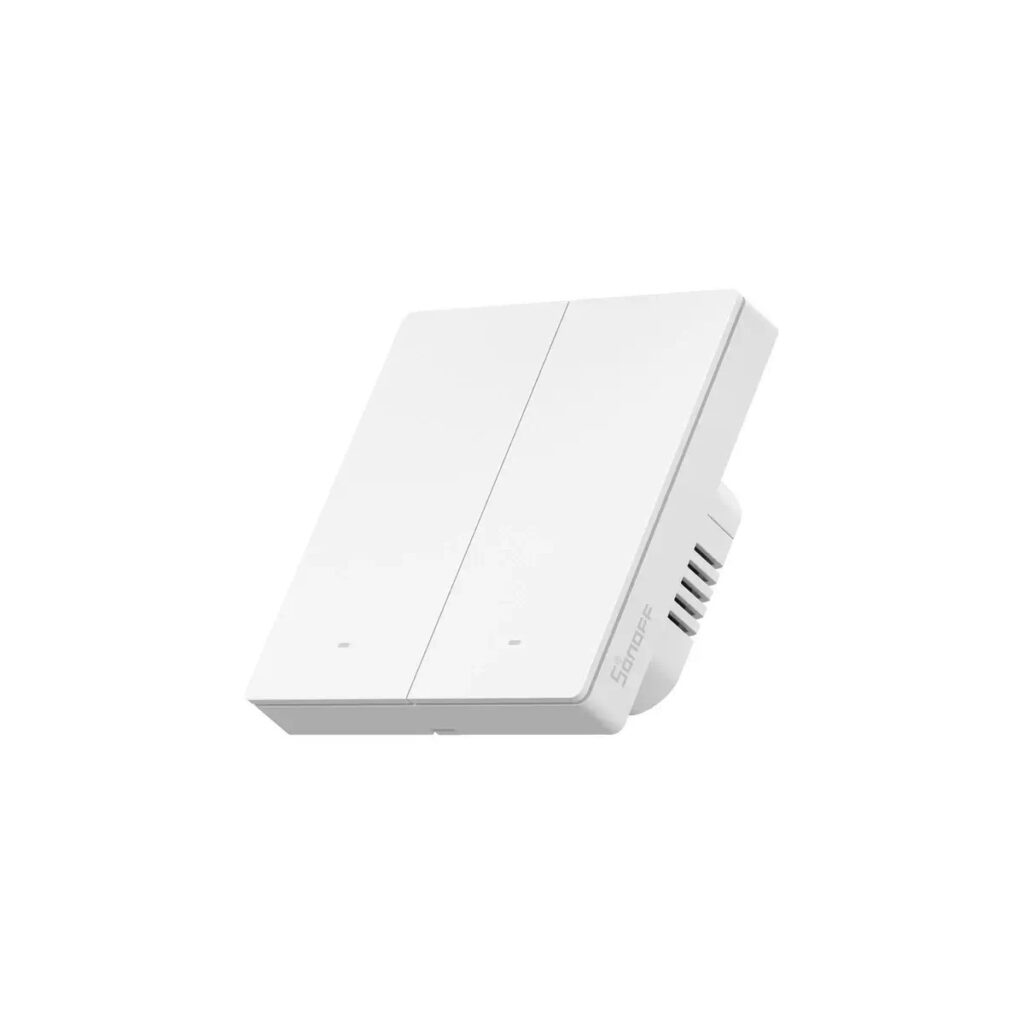
This smart wall switch supports the Matter standard and can integrate with Alexa, Google Home, and Apple Home. Because it’s wall-mounted and replaces a conventional light switch, it offers both functionality and aesthetics.
In practice, this switch enables users to turn lights or ceiling fans on/off using voice, app, or automation. It’s useful in rooms where a traditional smart bulb might not suffice (e.g., controlling multiple lamps or fans). Because it uses the Matter protocol, it’s more future-proof and modular.
2. SONOFF MINI R4 Switch WiFi

A compact, in-wall module that can convert traditional switches into smart ones without major rewiring. It supports two-way control, meaning you can control one circuit from two locations, like at the top and bottom of a staircase.
This module is highly versatile. For instance, in 2025, homes where vintage lighting fixtures are desired aesthetically, a MINI R4 allows integration without replacing the fixture. Also, for users who rent or live in shared housing, it offers smart control without altering the visible hardware.
3. TP-Link Tapo T100 Smart Motion Sensor
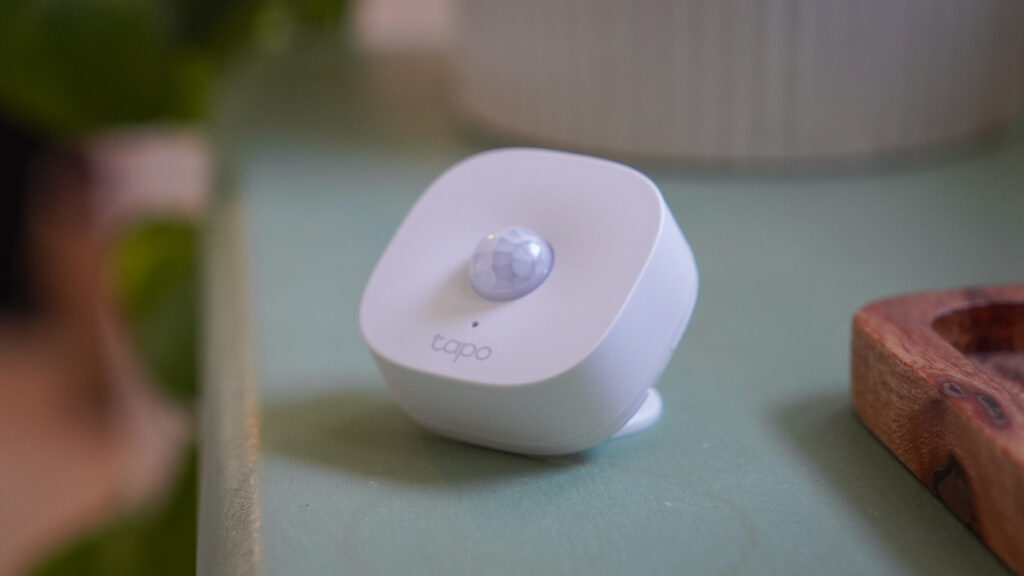
A motion/detection sensor that triggers automations like turning lights on/off or activating security routines. Because it’s Wi-Fi capable, it doesn’t need a separate hub, making it easy for smaller setups or retrofits.
In real settings, you might place this in hallways or dark corners. When motion is detected at night, it can trigger soft night lighting rather than full bright lighting, improving safety with low energy use.
4. Orvibo B25 Smart WiFi Socket
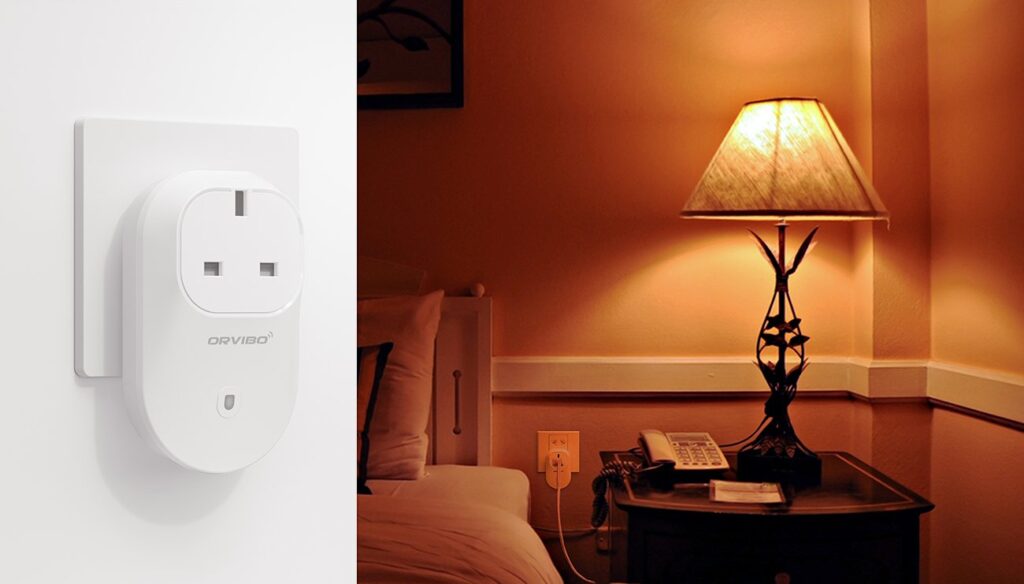
A “smart plug” that converts any standard appliance into a controllable device. It supports scheduling, energy monitoring, and remote control via app or voice assistant.
This kind of plug is extremely helpful for devices such as fans, heaters, or decorative lights. In 202,5, smart homes, using smart sockets, help monitor electricity usage per appliance and automate devices that otherwise lack “smart” capability.
5. Tuya Zigbee Smart Control Panel
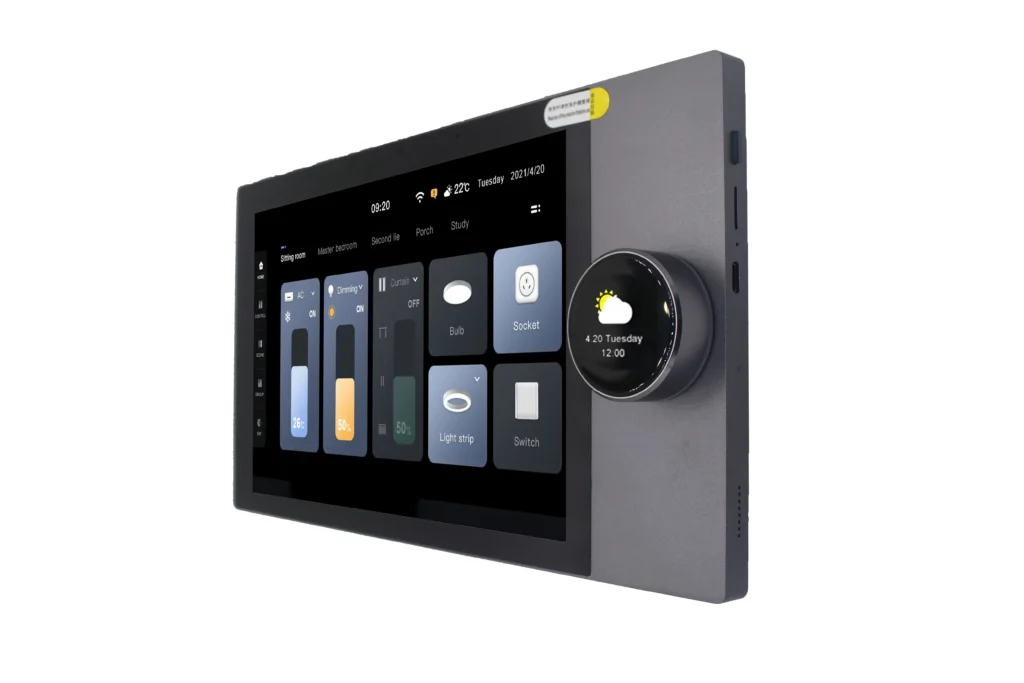
This panel allows users to control multiple Zigbee devices (lights, sensors, blinds) from one wall-mounted interface. It works in conjunction with broader systems.
In a real deployment, this panel becomes a physical control station in a hallway or living area, complementing app/voice control. It reduces friction when multiple devices are in use and gives guests or family members a straightforward interface.
Technology Under the Hood: What Powers the Best Devices
Network Protocols & Matter Standard
One of the biggest shifts in 2025 is the maturation of Matter-a unifying smart home protocol aiming to improve interoperability among devices from different brands. Devices built to Matter (like the SONOFF M5 switch) reduce fragmentation and friction.
Also, familiar protocols like Zigbee, Z-Wave, and Wi-Fi 6/6E/7 remain critical. Devices often support multiple protocols to maximize compatibility. Mesh networking (e.,g. via Zigbee or Thread) ensures stable coverage in houses with many walls or spread-out layouts.
Artificial Intelligence & Spatial Context
Cutting-edge research is pushing smart home devices beyond mere command-and-control toward context-awareness. For instance, a spatial context-aware system (INOT) allows users to issue spatially referenced commands like “turn on the light near the window” without naming device IDs.
Such innovations reduce the mental burden on users and make interfaces more natural. Another evolving area is offline speech recognition within the home, reducing latency and dependency on cloud connectivity.
Edge Processing & Decentralized Intelligence
Processing some duties locally (on-device or edge controllers) improves responsiveness and privacy. Rather than always relying on cloud servers, devices can interpret simple commands or manage routines locally. This is especially beneficial for security or lighting tasks.
Decentralized networks (similar to IoT meshes) also enhance robustness; a device failure or connectivity drop to the cloud doesn’t cripple the entire ecosystem.
Benefits & Advantages of the Latest Devices
Energy Efficiency & Cost Savings
Smart home devices enable granular control over lighting, heating, and appliances. For example, lights can dim or shut off when no occupancy is detected, or HVAC can optimize based on room usage. Over time, these adjustments yield lower electricity bills.
Energy monitoring, built into many plugs and switches, helps users understand usage patterns and identify wasteful devices. This transparency drives conscious consumption.
Convenience & Automation
The best devices allow seamless automation-lights follow your arrival, security systems engage at night, and HVAC preconditions rooms before your return. Over time, the home learns user habits and acts proactively.
Voice commands and mobile apps give users freedom from physical switches. Devices can also integrate with routines or schedules, reducing repetitive manual tasks.
Security, Safety & Peace of Mind
Smart locks, cameras, motion sensors, and doorbells grant remote visibility and control. Real-time alerts let homeowners respond to trespassing or disturbances. Integrated sensor networks (like leak, smoke, or motion detectors) increase overall home safety.
Privacy features (local control, encryption, minimal cloud reliance) protect users. On-device processing or secure protocols ensure data stays safe.
Scalability & Flexibility
Modern devices allow modular growth. You can begin with a few core devices (switch, plug, sensor) and expand over time. Support for standards like Matter ensures future compatibility, reducing the risk of obsolescence.
Flexibility to mix devices from different brands is crucial-modern smart homes should not be locked into a single vendor.
Use Cases: Real Problems Solved by Smart Devices
Use Case 1: Smart Lighting & Energy Saving in Large Homes
In a home with multiple rooms and zones, smart switches (like the SONOFF Smart Wall Switch) and motion sensors (Tapo T100) automate lighting-turn off in empty rooms, dim during evening, or respond to presence. This reduces energy waste and ensures comfort.
Use Case 2: Remote Monitoring & Control for Vacant or Second Homes
For homes left vacant for periods, devices like smart plugs (Orvibo B25) and sensors enable remote power cycling, security checks, and automation to simulate occupancy (e.g., turning lights on/off). This helps deter intruders and gives peace of mind.
Use Case 3: Legacy Appliances, Smartified
Older appliances without smart features can be controlled via smart plugs. For example, you can schedule your coffee maker or heater or turn off standby devices automatically to save power.
Use Case 4: Centralized Control in Shared Living Spaces
In shared homes or guest houses, a central control panel (Tuya Zigbee panel) helps unify control without each user requiring an app. It reduces confusion and ensures everyone interacts with the smart system easily.
Use Case 5: Energy Analytics & Feedback Loop
Energy monitoring plugs and switches collect usage data. Over weeks or months, users analyze trends and optimize routines accordingly. For example, discovering which appliance draws the most power or scheduling heavy loads during off-peak hours.
Challenges & Considerations
While the best smart home devices in 2025 offer great advantages, buyers should consider:
-
Privacy & Security Risks: Use devices with strong encryption, firmware updates, and local control options.
-
Network Reliability: Smart homes depend on stable Wi-Fi or mesh networks-weak infrastructure undermines performance.
-
Complexity vs. Simplicity: Too many devices or overlapping automations can lead to conflicts. A clear plan and centralized control help.
-
Compatibility and Vendor Lock-In: Prioritize devices supporting open standards (Matter) to avoid ecosystem lock-in.
-
Cost vs. Payback: Some devices cost significantly; evaluate whether the long-term energy savings or convenience justify the investment.
Frequently Asked Questions
Q1. Which device should I start with in building a smart home in 2025?
Start with a central controller or hub (that supports Matter) and a smart switch or plug to control a primary appliance. Then add motion sensors or cameras as needed.
Q2. Do I need a hub for smart devices now?
Not always. Many devices operate over Wi-Fi or Thread/Matter and don’t need dedicated hubs. However, hubs can improve reliability, reduce latency, and help integrate devices across ecosystems.
Q3. Can smart home devices reduce my electricity bill significantly?
Yes, especially in homes with poor energy habits. Automation, occupancy-based control, and energy monitoring can reduce waste and optimize usage, leading to noticeable savings over time.