Mastering Residential Property Listings Strategies, Tools & Best Practices for Maximum Reach
Residential property listings are the lifeblood of any real estate operation, whether you are a broker, agent, developer, or marketplace. A listing is more than just a photo, address, and price-it is a critical piece of digital real estate that must be discoverable, compelling, and optimized for both human visitors and search engines. In this comprehensive guide, we will explore what makes residential property listings effective, how technology enhances them, real‑world listing tools or platforms, the benefits of doing listings right, use cases and challenges solved, and finally address frequently asked questions.
What Are Residential Property Listings & Why They Matter
A residential property listing is a structured presentation of a home or dwelling that is available for sale or rent. It typically includes:
-
The address, neighborhood, and location context
-
Property specifications (bedrooms, bathrooms, floor area, lot size)
-
Photographs, floor plans, site maps
-
Descriptive narrative emphasizing features, upgrades, amenities
-
Pricing, availability, status (for sale, under contract, sold)
-
Contact or lead capture path (agent, form, phone)
Listings serve as a bridge between supply (homes) and demand (buyers). Because the vast majority of prospective buyers begin their search online, these listings must perform well in search engine results, attract clicks, and convert interest into inquiries.
Listings aren’t static marketing flyers they must adapt to SEO, visual storytelling, local relevance, and structural considerations (site architecture, link flows, indexing). A well-optimized listing becomes a source of organic traffic and leads, not just a passive ad.
Key Principles for High‑Impact Residential Property Listings
Keyword & Local Targeting
When designing a listing, embed local and long‑tail keywords naturally. Many searchers will include location (city, neighborhood, landmark) plus property type or features (e.g. “3 bedroom house in Kemang Jakarta,” “condo near CBD”). Choose target keywords via research tools and weave them into the title, headers, and narrative. Overusing generic or high‑competition terms without localizing will dilute your ranking potential.
Also, include secondary keywords for features (pool, garden, walkability, school district) so your listing can surface for more specific queries.
Unique Descriptions & Storytelling
Duplicate or boilerplate descriptions (especially provided by developers) are SEO poisons. Each listing should have a unique narrative, focusing on the story of the home: the light, the flow, neighborhood context, lifestyle appeal. Go beyond facts to evoke emotions and context: “sunlit living room with direct garden view,” or “quiet tree‑lined street steps from transit.”
This uniqueness not only helps human engagement but ensures your listing is not filtered out by search engines which penalize duplicate content.
Optimized Visuals & Media
High quality photos, video walkthroughs, drone shots, 3D floorplans, or virtual tours significantly boost engagement and time on page. But media must be optimized: compressed file sizes, descriptive file names, and alt‑texts that reflect the property and keywords (e.g. “modern living room Kemang Jakarta”). This helps search engines understand images and index better.
Embedded media like 3D tours or virtual reality can differentiate a listing from the competition and keep users engaged longer.
Structured Data & Schema Markup
To make your listings more “visible” to search engines, use real estate markup or schema (e.g. RealEstateListing, Offer, Place) to annotate attributes like price, address, number of bedrooms, availability, property type. Rich snippets (such as star ratings, price, address) may appear in search results, improving click-through rates.
Clean URLs & Site Architecture
Your listing URLs should be clean, descriptive, and keyword‑friendly (e.g. /properties/jakarta-selatan-3-bedroom), not numerical IDs. Use a logical site structure (category → neighborhood → listing) so users and search engines can crawl effectively. Internal linking to neighborhood guides, amenities, or related listings also helps with SEO and user retention.
Mobile Optimization & Speed
Many users view property listings on mobile devices. Responsive layouts, fast media loading, and clean navigation are crucial. Slow pages kill engagement and ranking. Compress images, lazy-load media, and optimize code.
How Technology Enhances Residential Property Listings
Modern listings go far beyond text and images. Technology can elevate them into dynamic, interactive sales tools.
Interactive Floor Plans, 3D Tours & Virtual Reality
Instead of static floor diagrams, listings can embed interactive 3D floorplans or virtual walkthroughs. A user can pan, zoom, navigate rooms virtually. This deepens engagement and helps remote or time-sensitive buyers. Because these are embedded media and part of the listing itself, they also help retain visitors longer.
Augmented Reality (AR) & Staging Tools
Some listings allow AR staging-users can overlay virtual furniture, decor, or color schemes on rooms via smartphone. This helps buyers visualize possibilities, increasing emotional connection. For new or empty properties, AR staging can illustrate potential layouts and boost appeal.
AI & Smart Recommendations
AI can power listing platforms to suggest similar homes, compare recent sales, or personalize property feeds for each user. For example, a listing platform might dynamically show “Homes like this you might like” below a listing, increasing cross‑visit engagement.
Lead Capture & Chatbots
Embedded chatbots or virtual assistants can answer visitor questions instantly (“What is the HOA fee?” “Is there a pool?”) and collect contact info. Because the chatbot is part of the listing page, it reduces friction and captures leads when they’re most engaged.
Analytics & Heatmaps
By integrating analytics and heatmap tools, you can see where visitors linger, which images they view most or whether particular sections get ignored. This insight allows iteration: reposition photos, refine descriptions, or move feature highlights based on user behavior.
Real‑World Examples & Listing Platforms / Tools
Below are several representative listing platforms or tools (or use cases) that illustrate how residential property listings are enhanced in practice.
1. Zillow (United States property marketplace)

Zillow is a dominant listing platform in the U.S. It features rich detail pages with high-res images, 3D tours (via Zillow 3D Home), property history, comparable sales, neighborhood data, and interactive mortgage calculators. Zillow also supports structured data and syncs listings via MLS feeds. Because of its huge domain authority and user base, agents often rely on Zillow indexing to get traffic and leads.
In Indonesia or other markets, similar marketplace equivalents act as demand aggregators. Zillow’s comprehensive listing detail pages show how media, market data, and recommended homes can be integrated in one property listing to engage and convert users.
2. Realtor.com / IDX integrated listing systems
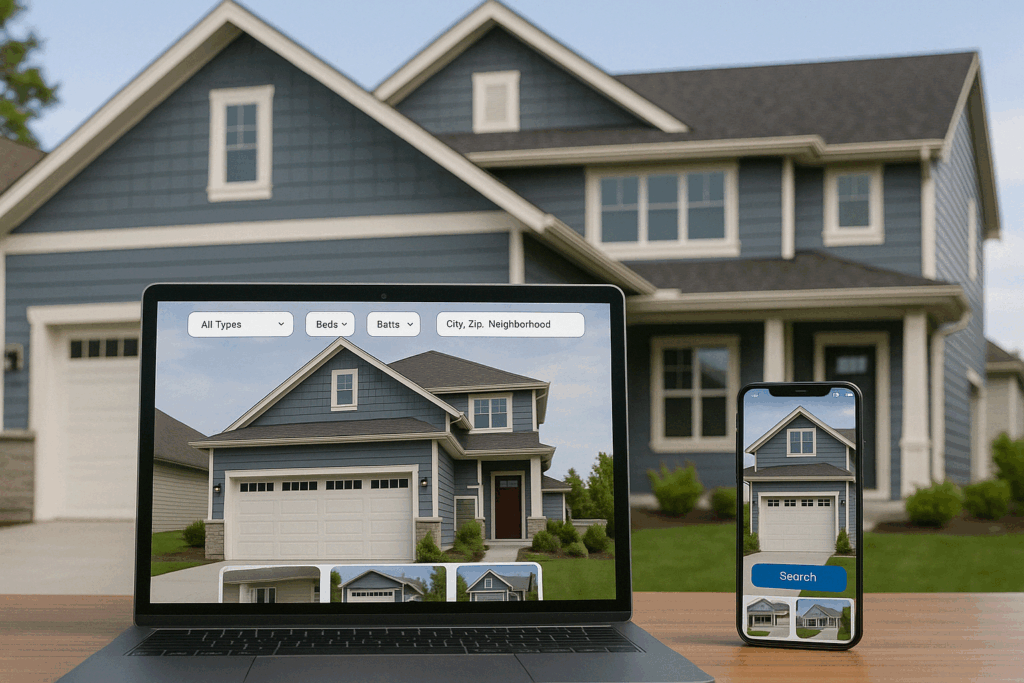
Many agent or brokerage websites use IDX (Internet Data Exchange) to pull listings from a Multiple Listing Service (MLS) into their own site. Realtor.com is a public portal often integrated with listing syndication. When a broker’s site embeds IDX listings, the listings appear seamlessly with property detail pages, images, maps, and neighborhood info. Because they live on the broker’s domain, they help build SEO equity rather than just sending users off-site.
3. Matterport 3D Capture Service

Matterport is a technology provider that captures 3D scans of real properties. The captured “digital twin” can be embedded in property listings, allowing users to virtually walk the rooms. Listings with Matterport tours often see increased engagement, more inquiries, and better conversion. In practice, agents build the listing media around the Matterport embed, adding descriptive narrative, floorplan overlays, and hotspot tags within the 3D model.
4. Propzy (Indonesia / Southeast Asia regional platform)

Propzy is a real estate ecosystem in Indonesia combining listings, property services, and agent-network. Its property listing pages include images, maps, amenities, and agent contact. As a localized platform, its listings are tailored for local search-integrating neighborhood context, public transport proximity, and Indonesian language keywords. Its pages serve as practical examples of how to localize listing content for regional audiences, especially in Southeast Asia.
5. Homes.com / Listing Feed Aggregators

Homes.com is another real estate portal that receives listing feeds from various brokers and real estate software. It presents standardized listing pages with images, maps, feature highlights, agent contact, and recommended similar listings. For agents, feeding into such aggregators gives exposure, but the challenge is ensuring content uniqueness and avoiding duplicate content across platforms.
Each of these examples shows how listing presentation, integration with data or media, and platform design influence the effectiveness of residential property listings. They illustrate that a listing is not merely a card with photos, but a multi-layered information and engagement experience.
Benefits of Well-Optimized Residential Property Listings
Greater Visibility & Organic Traffic
When listings are SEO-optimized (keyword targeting, schema, structured URLs, media alt-text), they have a better chance to rank for property search queries in search engines. That means your listing can attract organic visitors without paid ads.
Better Engagement & Lower Bounce Rates
Rich media, interactive elements, and compelling story elements keep visitors on the page longer, interact with the content, and explore related listings. This signals to search engines that the page is valuable, improving ranking, while also improving lead capture.
Increased Lead Conversion & Faster Sales Cycle
When listings are clear, detailed, user-friendly, and offer chat or inquiry paths right on-page, visitors are more likely to convert into leads. Removing friction (e.g. forcing them to navigate away) improves conversion rates and speeds the decision-making process.
Competitive Differentiation
In markets saturated with listings, those with 3D tours, immersive experiences, or superior narrative content stand out. Buyers comparing multiple listings will gravitate toward those that feel more polished and complete.
Scalable Listing Portfolio Value
If all your listings are built on a consistent, SEO-oriented template and infrastructure, you gain compounding benefits: internal linking between listings and neighborhood pages, cumulative domain authority, and reusability of content frameworks for new listings.
Use Cases & Problems Solved
Use Case: Agent Launching a Local Micro‑Market Campaign
An agent focusing on one or two neighborhoods can build a cluster of listing pages for that area, linking them to a neighborhood guide. Prospective buyers searching “homes in [neighborhood]” will land on the guide page, then flow into specific listings. This structure channels search traffic more efficiently into the agent’s listings, rather than letting generic aggregator portals dominate.
Use Case: Remote Buyer Engagement
For buyers unable to visit in person (for example, relocating from another city or abroad), immersive listings with 3D tours, AR staging, and detailed narrative context act as a virtual open house. This allows them to shortlist properties from afar and commit to fewer physical visits.
Use Case: Seasonal or Fluctuating Inventory
In markets with high turnover or seasonal listing patterns, well-optimized listings that stay indexed (even after “sold / off-market”) can still attract long-tail traffic. For example, users might search “123 Maple Street” even after it’s sold, and that old listing can redirect or present related homes. Maintaining a history of listings helps capture residual search traffic rather than letting it vanish. (Many platforms keep “sold” listings active for this reason.)
Use Case: Data Insights & A/B Optimization
With analytics embedded in listing pages, agents or brokers can test variant descriptions, images, or media ordering. If one version sees better lead engagement, they adjust future listings accordingly. Over time, you evolve a catalog of high-performing layout and content templates.
Best Practices & Pitfalls to Avoid
-
Do not duplicate content across listings or platforms. Always rewrite narratives and avoid copy-pasting developer blurbs.
-
Keep sold or expired listings live as “Sold / Off-Market.” Instead of deleting pages (404), convert them to archival listings that redirect to similar live ones. This preserves SEO value and captures long‑tail traffic.
-
Update schema / structured data regularly. If a listing’s status changes or price updates, reflect that in the structured markup.
-
Ensure mobile-first design. More than half of listing views come from mobile; if your layout fails on small screens, you lose leads.
-
Optimize image size, but maintain quality. Use modern formats (WebP), compress smartly, and lazy-load where possible.
-
Link intelligently. From a listing, link to neighborhood guides, amenity pages (schools, transit), and related listings. From those pages, link back to listings.
-
Monitor analytics & iterate. Use heatmaps, click maps, dwell-time data to refine layout, sequence, and content.
-
Be cautious with canonical tags or noindex. Some site operators try to canonicalize all listing pages to category pages, but that can reduce discoverability. Many SEO professionals argue for indexing individual listing pages (especially for specific addresses).
Summary
Residential property listings are not mere ads-they are content assets that must be designed, structured, optimized, and continually refined. By applying SEO best practices, integrating technology (3D tours, AR, chatbots), and telling unique narratives, listings can drive organic traffic, better engagement, and higher conversions. The examples above illustrate platforms and tools in action. The benefits (visibility, differentiation, conversion) are compelling, especially when combined with thoughtful site architecture and analytics.
In an increasingly competitive real estate market, agents and developers who treat each listing as a digital asset (not a short-lived flyer) will see compounding returns in traffic, leads, and brand authority.
Frequently Asked Questions
Q1: Should I index every residential property listing page in search engines?
Yes, generally you should. Even if a property sells, the page can remain as “sold” or “off-market” and link to similar current listings. Indexing these pages preserves residual search value (especially for address-level queries) rather than losing the SEO equity.
Q2: How do I avoid duplicate content when listings appear on multiple aggregator sites?
You should write unique narrative descriptions, add new images or angles, append local amenities, and include your own value context (why this home is special). Use canonical tags wisely if you host a “master version” on your own domain, and encourage aggregator sites not to duplicate entire descriptions.
Q3: What media types improve listing performance the most?
High-resolution photos, video walkthroughs, and interactive 3D tours tend to provide the biggest uplift in engagement and conversions. AR staging and virtual staging are helpful in empty homes. Use heatmap analytics to test which media types your audience engages with most on your site and prioritize those.